10 preguntas de selección múltiple · Dificultad: Mixto · Unidad: Listening & Media. Elige una alternativa y revisa la explicación.
Pregunta 1FácilIdentificar
Imagine you are listening to a conversation where a speaker says: 'Oh, great... another rainy day in Santiago.' with a flat, falling intonation. What is the speaker's tone?
Ver respuesta y explicación
Respuesta correcta: B. El uso de 'Oh, great' combinado con una entonación plana o descendente ante una situación comúnmente indeseada (un día lluvioso cuando se esperaba otra cosa) es un ejemplo clásico de sarcasmo o molestia en inglés.
Pregunta 2FácilComprender
During a listening exercise about directions, you hear: 'Go straight on Providencia Avenue, past the metro station, and the library is on your left.' What is the key information you should write down in your notes?
Ver respuesta y explicación
Respuesta correcta: A. Para tomar notas eficientes (note-taking), se debe registrar la información clave de la ruta de manera simplificada: la calle principal, el punto de referencia (metro) y la ubicación final (izquierda).
Pregunta 3FácilIdentificar
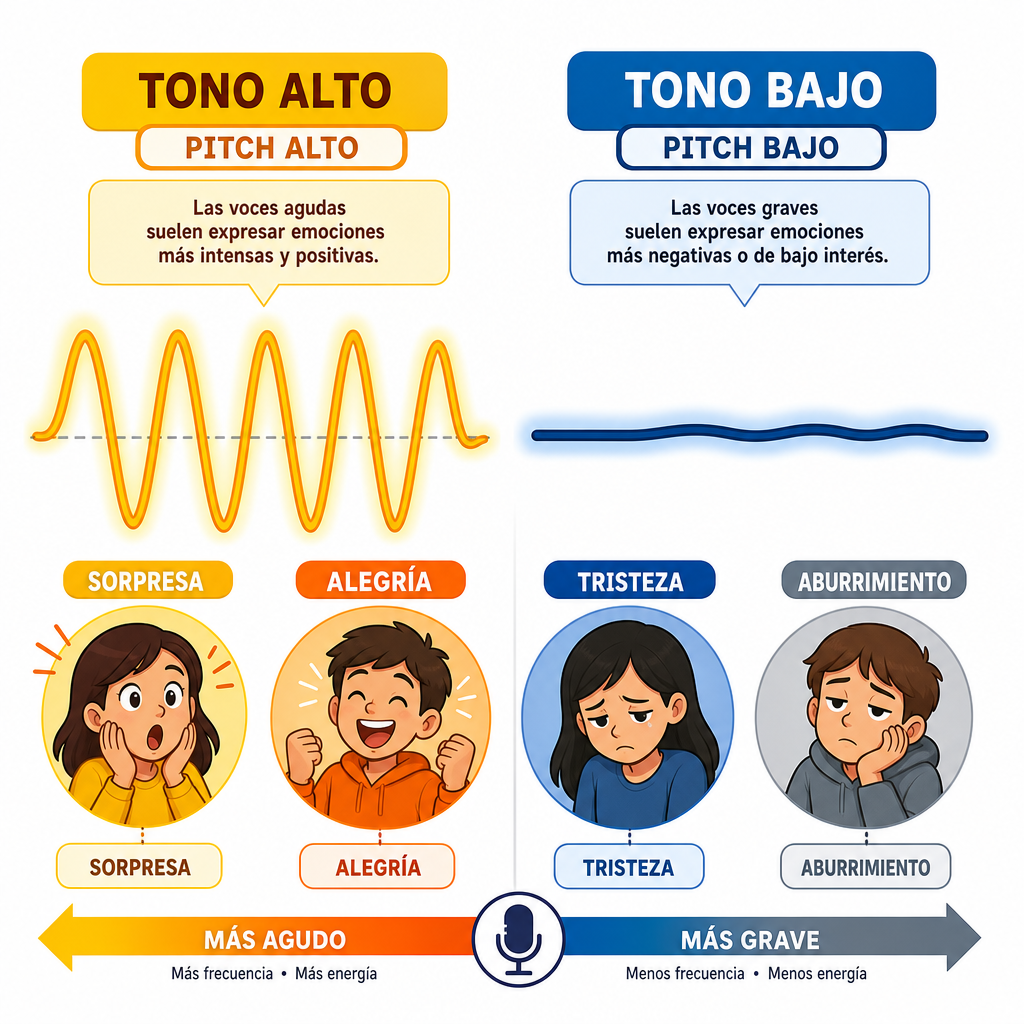
De acuerdo con la imagen adjunta, look at the visual guide about voice pitch and emotion. If a speaker's voice suddenly goes very high in pitch at the end of a sentence like 'We won the match?!', which emotion from the chart are they most likely expressing?
Ver respuesta y explicación
Respuesta correcta: C. Un tono de voz agudo (high pitch) al final de una frase que denota sorpresa o incredulidad ('¿¡Ganamos el partido!?') expresa sorpresa o asombro, a diferencia de los tonos bajos asociados a la tristeza o el aburrimiento.
Pregunta 4IntermedioComprender
You are listening to an interview with a Chilean student planning to study abroad. She says: 'Well... I want to go, but I'm not sure if my English is good enough yet.' What is her tone or attitude?
Ver respuesta y explicación
Respuesta correcta: B. El uso de vacilaciones ('Well...'), conectores de contraste ('but') y la frase expresa 'I'm not sure' (no estoy segura) indican claramente duda, inseguridad o ansiedad respecto a sus capacidades lingüísticas.
Pregunta 5IntermedioAnalizar
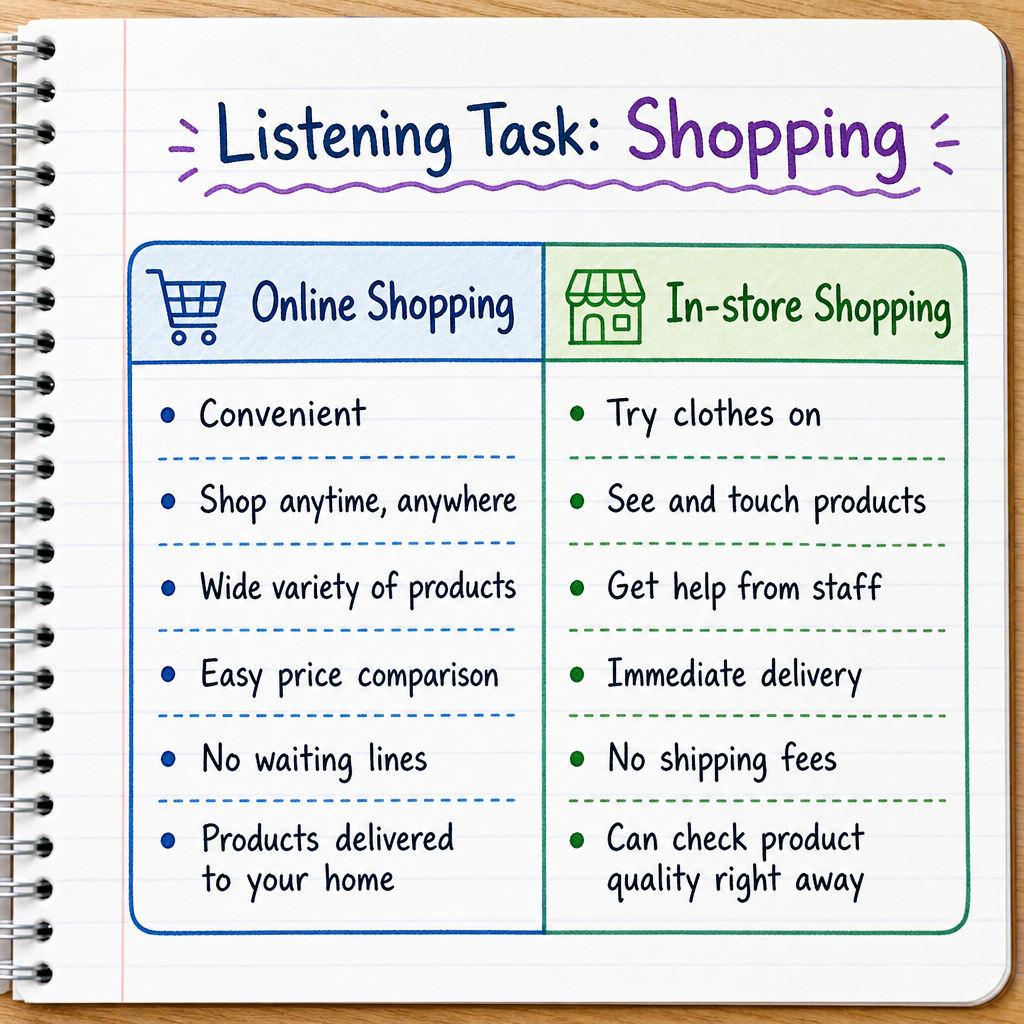
De acuerdo con la imagen adjunta, look at the student's notebook page. Based on the structured notes shown in the image, what was the main topic of the audio they listened to?
Ver respuesta y explicación
Respuesta correcta: B. La imagen muestra un cuadro comparativo de doble entrada con las ventajas y desventajas de 'Online Shopping' frente a 'In-store Shopping', lo que indica que el tema central es la comparación de estas dos modalidades de compra.
Pregunta 6IntermedioComprender
In a clothing store dialogue, the customer says: 'Excuse me, do you have this jacket in medium? The small one is tight.' The clerk replies: 'Let me check... ah, we only have large left.' Why does the customer NOT buy the jacket?
Ver respuesta y explicación
Respuesta correcta: C. El cliente necesita una talla mediana ('medium') porque la pequeña le queda apretada. El vendedor informa que solo queda talla grande ('large'), por lo tanto, no hay disponibilidad de la talla que el cliente requiere.
Pregunta 7DifícilAnalizar
During a school podcast, a student says: 'Oh, sure! I'd love to spend three hours doing homework on a Friday night.' with a heavy emphasis on 'love' and a sigh. What is the speaker's real perspective?
Ver respuesta y explicación
Respuesta correcta: C. El uso de 'Oh, sure!' y el fuerte énfasis en 'love' (amar) para referirse a una actividad generalmente impopular un viernes por la noche, sumado al suspiro, demuestra ironía/sarcasmo. El significado real es el opuesto: le desagrada la idea.
Pregunta 8DifícilEvaluar
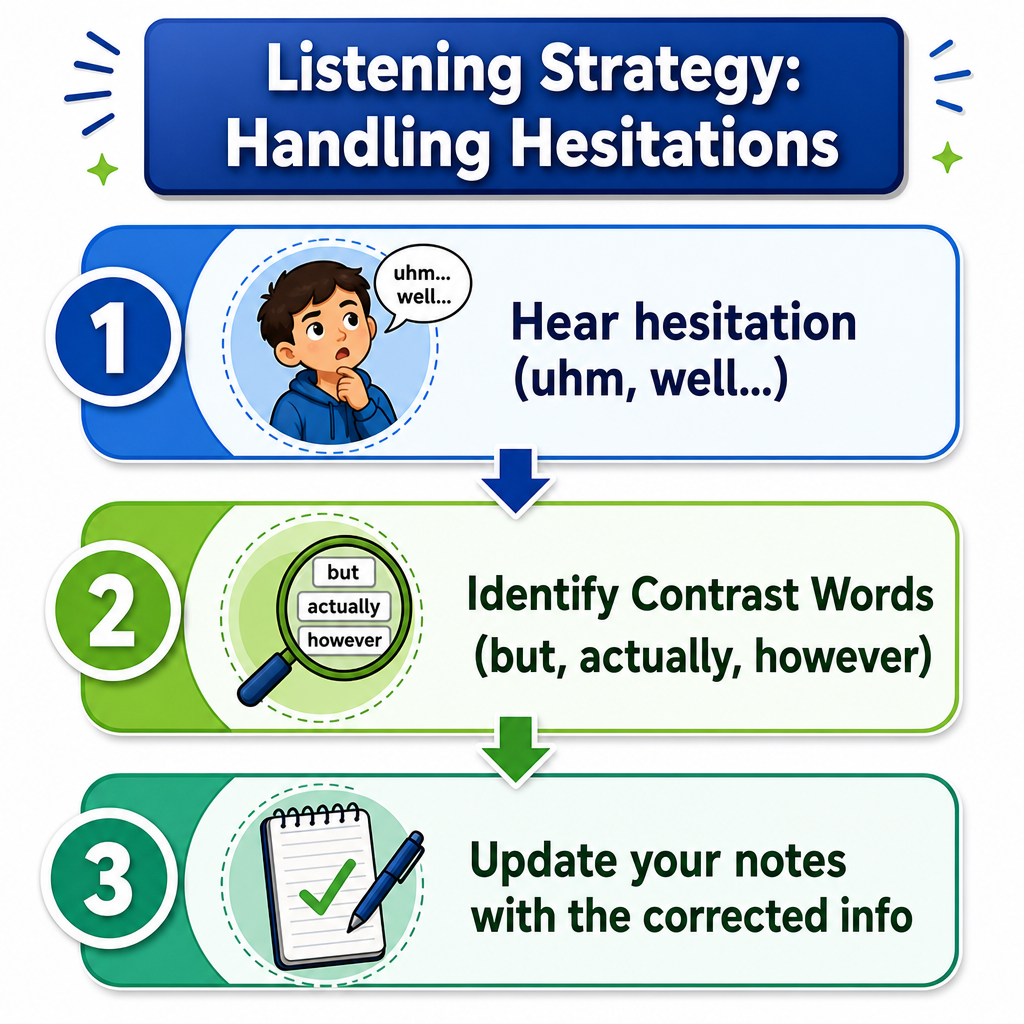
De acuerdo con la imagen adjunta, look at the flowchart outlining a listening strategy. If you hear a speaker hesitation like 'Uhm... well, actually...', which path on the flowchart should you follow to identify if they are changing their mind?
Ver respuesta y explicación
Respuesta correcta: B. El diagrama muestra que ante vacilaciones o conectores de contraste ('actually', 'however'), el oyente debe prestar atención a la información corregida o nueva que sigue para actualizar sus notas de manera precisa.
Pregunta 9DifícilAnalizar
You listen to a monologue: 'I was thinking of going to the cinema, but then I realized the tickets are 8,000 pesos. I guess I'll just watch a movie on Netflix at home.' What key information should you record in your notes about the speaker's final decision?
Ver respuesta y explicación
Respuesta correcta: B. Aunque el hablante menciona el cine al principio, usa la conjunción de contraste 'but' y concluye con 'I guess I'll just watch a movie on Netflix', motivado por el alto costo de las entradas. La decisión final es quedarse en casa.
Pregunta 10DifícilAnalizar
In an interview about future plans, a teenager says: 'My parents want me to study Medicine... [sighs]... but I don't know, music is my real passion.' What does the sigh and the contrast in this statement reveal about the speaker's feelings?
Ver respuesta y explicación
Respuesta correcta: B. El suspiro denota resignación o cansancio, y el contraste entre la expectativa de sus padres (Medicina) y su pasión personal (Música) revela un conflicto interno y presión ante la decisión de su futuro.