Test: Everyday interactions and expressing opinions
10 preguntas de selección múltiple · Dificultad: Mixto · Unidad: Speaking & Interaction. Elige una alternativa y revisa la explicación.
Pregunta 1FácilComprender y aplicar
Imagine you are at an airport check-in counter in Santiago. The airline agent asks you: 'Could I see your passport and boarding pass, please?'. Which of the following is the most appropriate and polite response?
Ver respuesta y explicación
Respuesta correcta: B. La respuesta 'Sure, here you go' es la forma más común y cortés de entregar documentos solicitados en un contexto de servicio como un counter de aeropuerto. Las otras opciones son desafiantes o no tienen sentido en el contexto.
Pregunta 2FácilComprender y aplicar
During a class debate about school uniforms, your classmate says: 'I think school uniforms make everyone look equal.' You want to show complete agreement. Which phrase should you use?
Ver respuesta y explicación
Respuesta correcta: B. 'I completely agree' expresa un acuerdo total de manera directa y respetuosa, ideal para un debate escolar.
Pregunta 3FácilComprender y aplicar
You are at a restaurant in Valparaíso and the waiter brings you the wrong dish. You want to point this out politely. What should you say?
Ver respuesta y explicación
Respuesta correcta: B. Usar 'Excuse me' seguido de una explicación suave ('but I think...') es la forma estándar y educada de reportar un error de servicio en inglés sin sonar agresivo.
Pregunta 4IntermedioAnalizar y aplicar
Read the following dialogue between two students discussing social media:
Tomás: 'I believe social media isolates people and destroys real friendships.' Sofía: '___________, but it also helps us stay connected with relatives who live far away.'
Which phrase best completes Sofía's polite disagreement?
Ver respuesta y explicación
Respuesta correcta: B. La frase 'I see your point, but...' permite a Sofía validar parcialmente la opinión de Tomás antes de presentar un contraargumento, lo cual es esencial para un debate educado.
Pregunta 5IntermedioAnalizar y aplicar
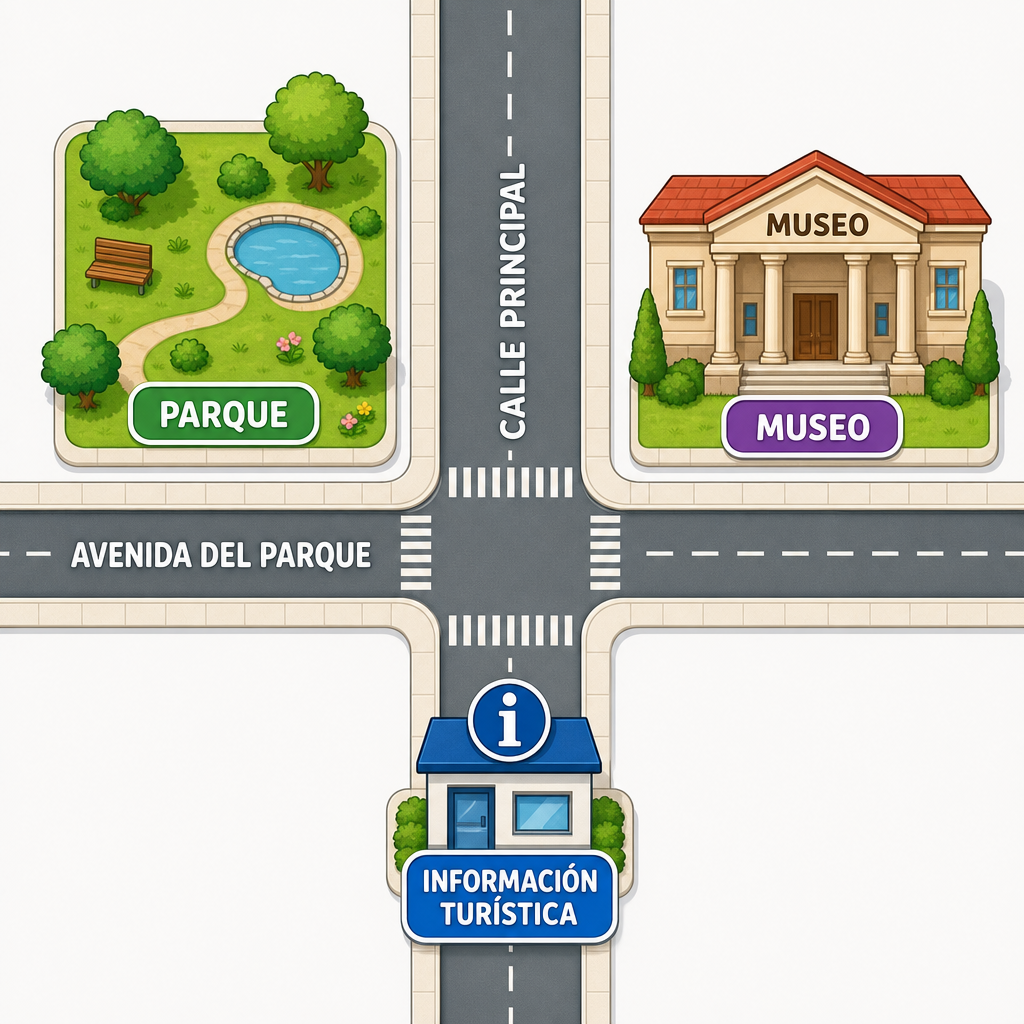
De acuerdo con la imagen adjunta, look at the map provided. You are currently at the 'Tourist Information' kiosk. A tourist approaches you and asks: 'Excuse me, how do I get to the Museum?'. Based on the map, which directions are correct?
Ver respuesta y explicación
Respuesta correcta: A. Siguiendo el mapa, desde 'Tourist Information' en High Street, se debe avanzar derecho, doblar a la izquierda en Park Avenue, y el Museo se encuentra a mano derecha, cruzando la calle frente al parque.
Pregunta 6IntermedioAnalizar y aplicar
In a group discussion about animal testing, Camila says: 'Testing cosmetics on animals should be completely banned worldwide.'
Diego wants to express strong opposition because he believes medical science sometimes requires it, but he wants to remain formal and polite. Which option is his best choice?
Ver respuesta y explicación
Respuesta correcta: B. La opción B demuestra una técnica de debate formal y respetuosa: valida la preocupación ética del interlocutor ('I understand your ethical concern') antes de introducir el contraargumento sobre la medicina.
Pregunta 7DifícilEvaluar y argumentar
During a round table discussion on environmental policies in Chile, a panelist suggests: 'To reduce pollution, we should immediately ban all private cars from entering Santiago.'
Another panelist wants to object using the phrase 'That's out of the question' because they believe the public transport system cannot handle the demand. Which of the following options shows the correct and most coherent use of this phrase?
Ver respuesta y explicación
Respuesta correcta: A. 'That's out of the question' se utiliza para expresar que una propuesta es totalmente inviable o inaceptable. La opción A es la única que justifica coherentemente por qué la medida es imposible de implementar (el transporte público colapsaría).
Pregunta 8DifícilEvaluar y argumentar
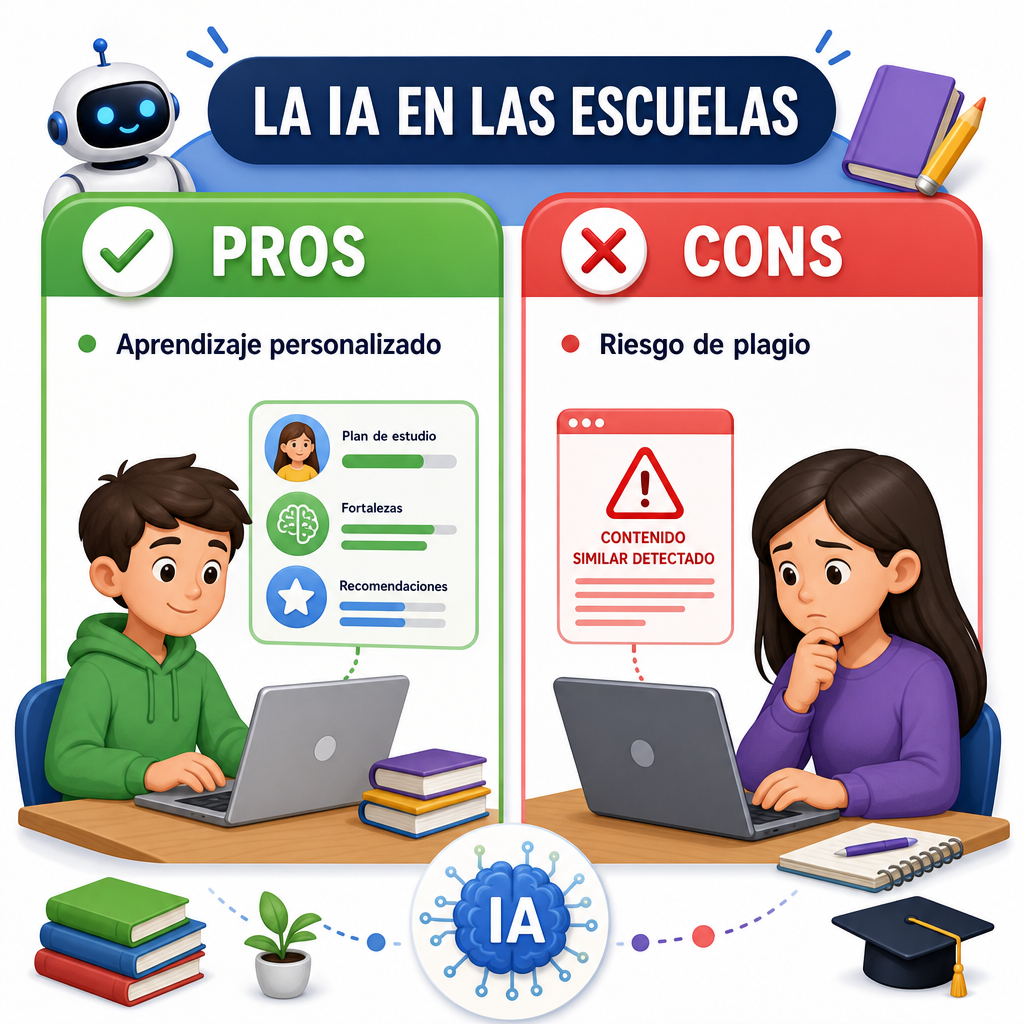
De acuerdo con la imagen adjunta, look at the infographics showing different viewpoints on artificial intelligence in education.
If you are participating in a structured debate and need to build a coherent counter-argument against the 'Cons' column using polite disagreement, which of the following statements is the most appropriate?
Ver respuesta y explicación
Respuesta correcta: B. La opción B es un contraargumento fuerte, coherente y educado. Reconoce la validez del punto negativo ('plagiarism') pero ofrece una solución o beneficio alternativo ('personalized tutor'), manteniendo la fluidez y el respeto en el debate.
Pregunta 9DifícilAnalizar y aplicar
You are role-playing a hotel check-in at a travel agency. The receptionist says: 'I am sorry, sir/madam, but we do not have your reservation in our system, and we are fully booked tonight.'
Which response maintains a polite but assertive tone to resolve the issue?
Ver respuesta y explicación
Respuesta correcta: C.
Pregunta 10DifícilEvaluar y argumentar
In a round table about digital privacy, a student states: 'Since we have nothing to hide, we shouldn't care if tech companies track our personal data.'
Which of the following responses shows the highest level of fluency, coherence, and polite disagreement for a Second Medio level?
Ver respuesta y explicación
Respuesta correcta: B. La opción B demuestra un vocabulario avanzado pero apropiado para el nivel, utilizando la estructura concesiva 'I see your point, but...' de manera muy coherente para redefinir el concepto de privacidad como un derecho y no como algo sospechoso.