10 preguntas de selección múltiple · Dificultad: Mixto · Unidad: Gramática y vocabulario avanzado. Elige una alternativa y revisa la explicación.
Pregunta 1FácilComprender y aplicar
Read the following sentence and choose the correct modal verb to express strong probability or deduction based on logical evidence:
"The streets are completely wet this morning. It ________ rained during the night."
Ver respuesta y explicación
Respuesta correcta: A. We use 'must have' + past participle to make a strong, logical deduction about a past event based on clear present evidence (the wet streets). 'Should have' expresses regret or unfulfilled expectation, while 'might not have' indicates low probability.
Pregunta 2FácilComprender y aplicar
Identify the option that correctly completes the sentence to express a recommendation or advice about a past action:
"You ________ studied more for the PSU/PAES exam last year; you had plenty of free time."
Ver respuesta y explicación
Respuesta correcta: B. 'Should have' + past participle is used to express advice, criticism, or regret about past actions that did not happen. 'Must have' is for logical deduction, and 'couldn't have' expresses impossibility.
Pregunta 3FácilComprender y aplicar
Choose the correct modal verb to complete the sentence, expressing a weak possibility about a past event:
"I can't find my keys anywhere. I ________ left them at school yesterday, but I'm really not sure."
Ver respuesta y explicación
Respuesta correcta: C. 'Might have' + past participle is used to express a weak or uncertain possibility about a past event ('I'm really not sure'). 'Must have' indicates strong certainty, and 'should have' indicates advice or expectation.
Pregunta 4IntermedioAnalizar y aplicar
Read the conversation between two classmates in Santiago:
- Camila: 'Did you see Felipe at the concert yesterday?' - Benjamín: 'No, he ________ been there. He told me he was traveling to Valparaíso yesterday morning.'
Which option best completes Benjamín's response to express absolute impossibility?
Ver respuesta y explicación
Respuesta correcta: A. 'Couldn't have' + past participle is used to express that a past action was impossible based on strong evidence (he was in Valparaíso). 'Must not have' is used for a negative logical deduction but is less appropriate here than the physical impossibility expressed by 'couldn't have'.
Pregunta 5IntermedioAnalizar y aplicar
De acuerdo con la imagen adjunta, look at the diagram showing a timeline of events. Based on the sequence of events illustrated in the image, choose the statement that correctly uses an advanced tense to describe the relationship between the two actions.
Ver respuesta y explicación
Respuesta correcta: A. The diagram shows that the quiz was completed before the teacher's arrival. The Past Perfect ('had already finished') is correctly used to show that an action was completed before another action in the past ('arrived').
Pregunta 6IntermedioAnalizar y aplicar
Read the following scenario:
"Sofía was supposed to present her English project today, but she didn't show up. Her teacher knows she was feeling very sick yesterday."
Which of the following deductions carries the highest degree of certainty regarding why Sofía is absent?
Ver respuesta y explicación
Respuesta correcta: A. 'Must have' indicates a very high degree of probability or logical certainty based on strong evidence (she was very sick yesterday). 'Might have' and 'could have' express lower degrees of certainty, and 'should have' expresses a recommendation or expectation, not a logical deduction.
Pregunta 7DifícilEvaluar y sintetizar
Analyze the context and choose the option that best expresses a past possibility that did NOT actually happen, using a complex conditional structure:
"If we had invested in renewable energy years ago, our school ________ its carbon footprint by half today."
Ver respuesta y explicación
Respuesta correcta: D. This is a Third Conditional structure ('If + past perfect ... would have + past participle') used to talk about an imaginary past situation and its hypothetical past/present result. 'Would have reduced' correctly completes this condition.
Pregunta 8DifícilEvaluar y sintetizar
Read the complex grammatical structure below and select the option that correctly interprets the level of certainty and the time frame of the statement:
"She can't have forgotten about the university application deadline; she had set three reminders on her phone."
Ver respuesta y explicación
Respuesta correcta: A. 'Can't have' + past participle is used to express a strong negative deduction about the past (almost 100% certain that something did not happen), backed by the evidence of having three phone reminders.
Pregunta 9DifícilEvaluar y sintetizar
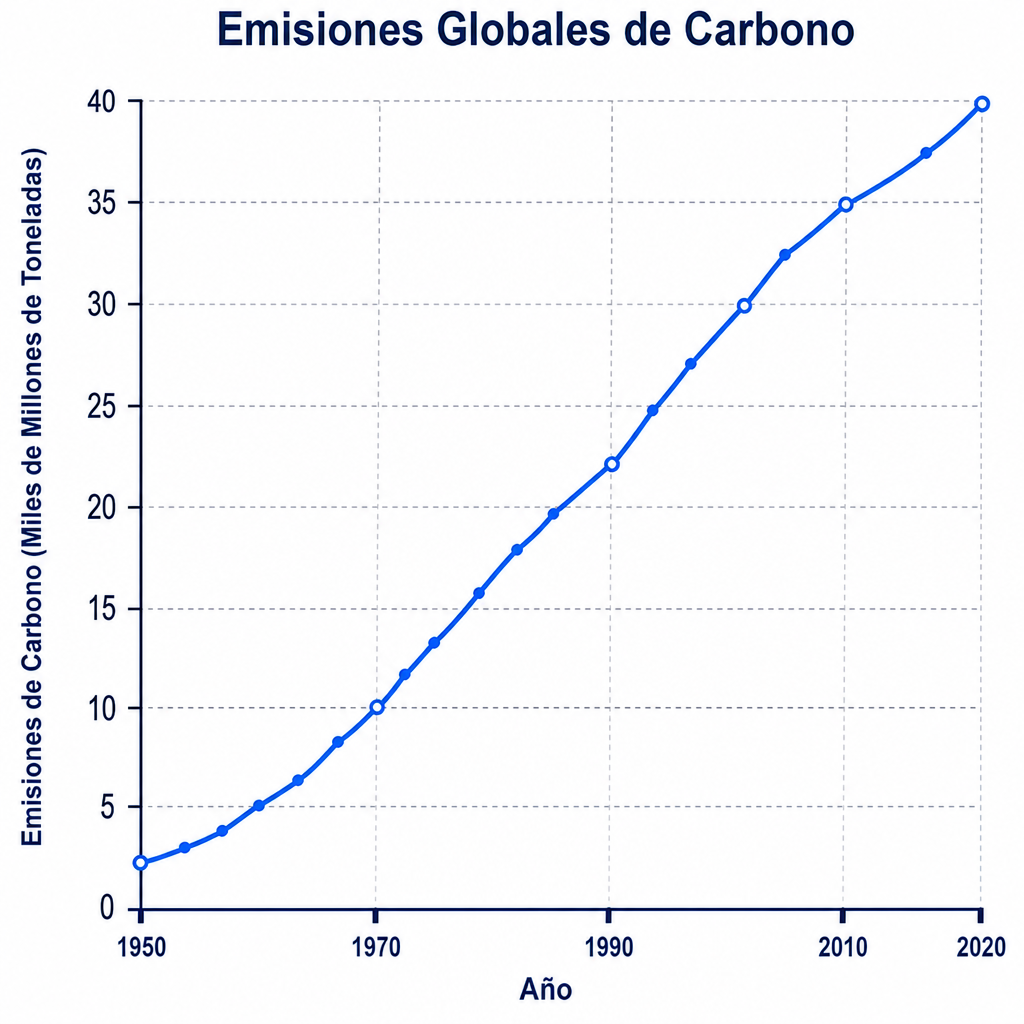
De acuerdo con la imagen adjunta, observe the scientific graph showing global carbon emissions over time. Based on the trends shown in the graph, choose the statement that uses advanced modality to make a logical deduction about past global actions.
Ver respuesta y explicación
Respuesta correcta: A. The graph shows a sharp upward curve in carbon emissions during the late 20th century. Based on this evidence, 'must have accelerated' is the correct logical deduction expressing high certainty about past actions. 'Should have' implies a recommendation to pollute, which is incorrect, and the other options contradict the graph.
Pregunta 10DifícilEvaluar y sintetizar
Choose the option that correctly combines future perfect and past modal structures to express a completed action in the future and its dependency on a past possibility:
"By next December, we ________ our high school education, which ________ impossible without our teachers' constant support."
Ver respuesta y explicación
Respuesta correcta: A. 'Will have completed' (Future Perfect) is used to describe an action that will be finished by a specific point in the future ('By next December'). 'Would have been' (past conditional modality) expresses a hypothetical past scenario that was avoided thanks to the teachers' support.